Healthy Tensions in Bible Teaching

Share:

Sometimes as Bible teachers we can become torn between what students want and what they need. It can form a tension within us as we realize the short amount of class time we have to teach eternal truths; yet, we strongly desire that students enjoy class and want to be there. This kind of tension can be healthy for us, making us better teachers if we work through it.

How to Let Tensions in Bible Teaching Be Healthy

To have a healthy response to these tensions, do the following:

1) Acknowledge the tensions.

Tugging on one side, we may have children who love to play, teens who crave socialization and fun, and adults who want to chart their own course for what study they deem as valuable and beneficial. On the other side, we see how critical God’s Word is to get to know Him and navigate life. How much play and fun versus structured learning should we incorporate into the session? How do we encourage the building of relationships and still spend sufficient time studying Scripture? How can we give students some autonomy yet make sure they’re getting what they truly need?

2) Welcome the tension.

If we take time to think through these, and other, issues in teaching, it should lead to more purposeful adapting. We’ll be forced to think through how we teach and make sure whatever we do counts and leads to a greater good.

3) Plot a course for addressing the tensions.

Some of these tensions revolve around the way people learn at different age levels. Some deal with needs at different stages of life. If we want students to learn, we need to ask God how to teach in line with these realities. We need to ask the following questions as we structure our lessons:
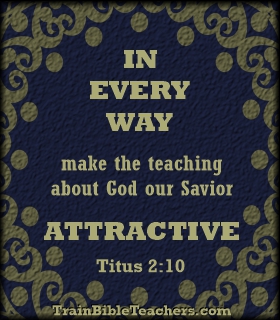
Make Teaching Attractive by Adapting to Students Needs and Ways of Learning

    • How can we “in every way … make the teaching about God our Savior attractive” (Titus 2:10)?
  • What are “all possible means” we can use to meet and reach students where they are (1 Cor. 9:22)?

It isn’t a matter of either/or but rather purposefully using their desires and needs within the session to increase the potential of learning. When intentionally guided, time isn’t wasted. Rather, learning gets enhanced. The problem comes when we simply cave in to students’ desire to play, socialize, and exert autonomy with no real purpose or direction.

Share:

Teachers with Shaky Foundations

Share:

If we are going to teach the Bible in ways that affect people’s lives, then we need to at least have some basic Bible knowledge and beliefs on which we build. Teachers with shaky foundations fail to instill a faith worth holding onto in their students.

Why Teachers with Shaky Foundations Lead to Students Easily Shakened

What we believe about the Bible has implications for how we teach it. What we understand the Bible to be about has implications for how we present the God of Scriptures to others and how we answer students’ questions. It will even affect how seriously we take the need to study and prepare the lesson.


Jesus said, “Can the blind lead the blind? Will they not both fall into a pit? The student is not above the teacher, but everyone who is fully trained will be like their teacher.” (Lk. 6:39-40)

The Foundation upon Which Effective Teaching Needs to be Built

Here are two basics Bible teachers need to adhere to if they are going to help lay a firm foundation in their students’ lives:

  1. The Authority of the Bible: It’s inspired by God.

If we don’t believe “all Scripture is God-breathed” then we won’t teach it as absolute truth. If that’s the case, why would our students depend on God’s Word to be truly “useful for teaching, rebuking, correcting and training in righteousness”. And, how then will they become “thoroughly equipped for every good work”? (2 Tim. 3:16-17)

  1. The Focus and Theme of the Bible: It’s about God and His love story.

If we merely look at the Bible as a bunch of isolated stories and commands to obey then we’ll miss passing on the heart of God. Through the ages He has worked to bring people into a love relationship with Himself. Since “we love because he first loved us” (1 Jn.4:19), how will our students grow to love the Lord with all of who they are which will spill over into them loving others? These are the greatest commandments on which “all the Law and the Prophets hang” according to Jesus (Matt. 22:37-40).

Glean more with the What Bible Teachers Need to Know About God’s Word To Help Students Find God in the Scriptures Download. In addition to providing a bit more about the authority, focus, and theme of the Bible, it gives a brief summary of the entire Bible and a panoramic view of God through the Bible.

Share:

Bible Illiterate Teachers

Share:

None of us have a complete knowledge and understanding of the Bible Yet, if we’re going to help our students base their lives on the foundation of God’s Word, we need at least a basic understanding and a pursuit to grow in that knowledge. If not, as Bible illiterate teachers, we will produce Bible illiterate students.


Jesus said, “Can the blind lead the blind? Will they not both fall into a pit? The student is not above the teacher, but everyone who is fully trained will be like their teacher.” (Lk. 6:39-40)

Why Teachers Need at Least a Basic Knowledge of God’s Word

If nothing else, we need to consider our accountability to the Author of God’s Word. He said, “Not many of you should presume to be teachers, my brothers, because you know that we who teach will be judged more strictly.” (James 3:1) Why? Because our words can affect people’s lives for eternity (James 3:2-12). An inaccurate representation of God can turn people away from Him or set them on a course toward dysfunction, maybe even destruction, rather than build their faith.

We may think teachers lacking a basic knowledge can get by because they use a curriculum with a teacher’s manual that tells them what to say. What happens when students ask a question or the lesson plan uses a method that opens the door to discussion? What happens if a student approaches the teacher before or after class?

Tendencies of Bible Illiterate Teachers

Bible illiterate teachers tend to lack discernment that’s based on godly wisdom and righteousness.

In fact, though by this time you ought to be teachers, you need someone to teach you the elementary truths of God’s word all over again. You need milk, not solid food! Anyone who lives on milk, being still an infant, is not acquainted with the teaching about righteousness. But solid food is for the mature, who by constant use have trained themselves to distinguish good from evil. (Heb. 5:12-14)

Bible illiterate teachers consequently tend to pass on that which is based more on human wisdom rather than the truth of God’s Word. These mistruths need to be unlearned which sometimes never happens and people continue on with an inaccurate understanding of God which affects the way they live. Is it any wonder we’re exhorted, “Do your best to present yourself to God as one approved, a workman who does not need to be ashamed and who correctly handles the word of truth.” (2 Tim. 2:15)?

A big reason we have teachers who remain Bible illiterate is that they have a shaky foundation which doesn’t produce the motivation to study God’s Word. The next post will look at Teachers with Shaky Foundations.

Bible Illiterate and Want to Better Know God’s Word? Go To: Bible Study Resources

Share:

Called to Teach But Still Afraid?

Share:

Sometimes people sense God wants them to be a Bible teacher, but they’re afraid to step out and do it.

Fears about Becoming a Bible Teacher

What is it about Bible teaching that might instill fear?

1) Teaching the Bible is a big responsibility.

We think twice when we read, “Not many of you should become teachers, my fellow believers, because you know that we who teach will be judged more strictly.” (James 3:1). Awareness of the level of accountability it brings might cause some trepidation about teaching.

2) Teaching is an upfront type of ministry.

Uncertainties of what others will think about our abilities might generate a little nervousness about saying or doing the right things.

3) Teaching is a stretching opportunity.

Learning new methods, knowing how to answer students’ questions, and dealing with challenging students can take us out of our comfort zones, making us afraid of the unknown.

Overcoming Fear When You’re Called to Teach But Still Afraid

God appeared to Moses in a phenomenal way not simply to get his attention but also because God already knew Moses’ fears. He met Moses in a way that provided a visual demonstration of who it was that would be calling him. Through this encounter God verbally extended assurances and promises for the task ahead based on who HE was, not on who Moses was or what Moses could do. We can get beyond our fears by looking at the assurances and promises of a powerful, personal, holy, and faithful God who will be with us each step of the way.

Called to Teach But Still Afraid
The title for this post, Called to Teach But Still Afraid, is the name of a devotional available in the MinTools.com store that looks at how God met Moses with all of his fears.

Share: