The Spirit at Work in Our Bible Teaching

Share:

Given the role of the Holy Spirit to magnify Jesus, it’s important for teachers to understand how He does that. When we consider the way the Spirit works in our Bible teaching, we realize just how essential He is for us as teachers but also our students.

Acrostic of the Spirit’s Work in Bible Teaching

In the following acrostic, we will see how the Spirit works in and through us.

S – Speaks through us (1 Cor. 2:4-5)

The Holy Spirit empowers our communication so that we become a conduit through whom God’s message flows. It’s not about our eloquence as a speaker or human wisdom but the power of the Spirit using our words to transmit the truth our students need.

P – Prays for us (Rom. 8:26-27)

When faced with our own insecurities and weaknesses, we can count on the Spirit to intercede for us. When faced with situations in the classroom or in students’ lives about which we don’t even know how to pray, the Holy Spirit prays for us in accordance with God’s will.

I – Instructs us (Jn. 14:26; 1 Cor. 2:9-16)

Unless the Spirit helps us understand, we won’t be able to adequately explain God’s Word. Unless the Holy Spirit works in the hearts of our students, they won’t be able to understand and accept the truth presented to them.

R – Reminds us (Jn. 14:26)

We can adequately prepare for a lesson and still get asked questions we may not be sure how to answer. With a quick prayer for help, the Spirit will prompt us on how to respond, often reminding us of what God’s Word says about the matter.

I – Indwells us (Jn. 14:16-17; 2 Tim. 1:14)

What a reassurance to know we’re never alone in our teaching. We always have the Helper not only by our side but also in us.

T – Transforms us (1 Cor. 6:11; 2 Cor. 3:18; Gal. 5:16-17; 2 Thess. 2:13; 1 Pet. 1:2)

The Spirit’s sanctifying work in our own lives makes us more and more Christ-like in the way we act and react, enabling us to say, “Follow my example, as I follow the example of Christ” (1 Cor. 11:1). We must always remember that just as the Spirit transforms us from the inside out, so He works in our students’ lives. He uses God’s Word as a sanctifying tool (Jn. 17:17).

The Holy Spirit & My Teaching Devotional
For more on the work of the Spirit in our Bible teaching, go to: The Holy Spirit and My Teaching Devotional
(Please note, the above acrostic is not included in that resource.)

Share:

Parent-Teacher Communication Not Always Automatic

Share:

Keeping lines of communication open between teachers and parents is important. Parent-teacher relations, however, don’t always happen automatically.

Importance of Parent-Teacher Relationships

Parent-Teacher RelationshipTeachers need the support of parents to effectively minister to the needs of their students.  Parents need the support of teachers to enhance their spiritual nurturing efforts.

Input in Student's LifeStudents need the support of both parents and teachers as they navigate through this life.
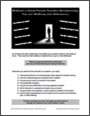

Everyone benefits!

How to Increase the Potential for Communication Between Parents and Teachers

Examine your teaching philosophy.

If we see our ministry as only what happens in the classroom, we’ll be less likely to keep in touch with parents. The more impact we hope to have on students’ lives, the broader our focus must become.

Set reminders for yourself.

We can get busy with life and easily overlook this important part of teaching children and youth. Good intentions don’t build relationships. We must be purposeful and diligent for it to happen.

Take steps to learn how to gain the trust and cooperation of parents.

We aren’t all natural diplomats. We may need help knowing how to deal with issues that arise when parents hold unreasonable expectations or have no expectations at all.

Without a Good Parent-Teacher Relationship Worksheet
Get help thinking through how to improve parent-teacher relationships with the Without a Good Parent-Teacher Relationship Worksheet.

Share:

Choosing and Using Bible Curriculum

Share:

Curriculum provides a series of lessons that teach the Word of God in a systematic, often incremental way. We might purchase curriculum published by others or write our own. Either way, we should look for and implement a biblically sound plan.

Acrostic of Points to Consider When Choosing and Using Bible Curriculum

The following should be incorporated in whatever curriculum we use to teach God’s Word:

C Choose Wisely

Make sure it rightly divides the Word (2 Tim. 2:15) as well as making sure it is sound otherwise.

U Understand Age Level Characteristics

Gear it to the abilities and needs of the age being taught, adapting it to best reach them where they are (1 Cor. 9:19-22).

R Remember Application

Guide people into seeing the implications and application of the lesson to life knowing that God wants us to be doers of the Word and not hearers only (James 1:22-25).

R Reach for Changed Lives

Keep God’s long range goal in front of you that we become new (2 Cor. 5:17), that we become more and more Christ-like (Rom. 8:29).

I Introduce so as to Build Interest

From the start, draw people’s attention (Titus 2:10), helping them see the relevance of the lesson to their lives.

C Center Around God’s Word

Make His Word the source of authority as it is inspired by God and that which is useful for working in people’s lives (2 Tim. 3:16-17).

U Use Variety of Methods

Follow God’s pattern of presenting truth in multiple ways (Heb. 1:1-2).

L Look to God for Help

No matter how good the curriculum might be, it doesn’t change lives. — God does (Phil. 2:13; 2 Pet. 1:3) and only by His Spirit will people truly learn and change (1 Cor. 2:4-5, 9-16).

U Use Relevant Visuals

Reinforce the spoken word with visuals as even God does that (Rom. 1:20).

M Make Adjustments as Needed

If something doesn’t seem like it will work for your group, adjust it and even more important, don’t get so locked in that you stifle the Holy Spirit (1 Thess. 5:19).

Share:

Teachers Have Learning Styles Too

Share:

Just as students have
preferred ways of learning,
so do teachers.

Why Is It Important for Teachers to Identify Their Learning Style?

A teacher’s learning style will become their default mode in the way they teach if they aren’t careful. By identifying our preferred way of learning, we can become more aware of the tendencies it will bring to the teaching-learning process.

Get a few more thought about this question in the Bible Teacher’s Handbook of Frequently Asked Questions which also asks “How do I learn to teach in a way that makes me step out of my own learning style?”. (The handbook responds to two more questions about learning styles as well as answering questions about 48 other issues in Bible teaching.)

My Style – Their Style

Learning Styles of Teachers and StudentsWhile we do need to guard against teaching in ways that only or primarily reflect our own teaching style, we shouldn’t park ourselves at the door when we teach. God gave us our unique bents for a reason. Students will benefit from who we are.

A six page worksheet produced by the Ministry Tools Resource Center, called My Style – Their Style, addresses this issue.

More Resources: Learning Styles Teacher Training Resources

Share: