Jesus: Mere Tradition or Make-Believe Holiday Folklore?

Share:

Jesus is Truth not Make-Believe Holiday FolkloreThe story of Christmas and Easter of the birth, death, and resurrection of Jesus is more than a great valentine love story. It’s true, not a mere fable or holiday tradition. Jesus is not make-believe but real. The power of God to raise Jesus from the dead and perform all the other miracles written in the Bible takes more than a make-believe superpower. Unless people see Jesus as real and worthy of more than a simple nod of acknowledgment over the holidays, the Gospel message will do little to change their hearts.
The holidays consequently provide teachers with many opportunities but also some challenges. Cut through all the secular traditions surrounding these holiday celebrations so Jesus doesn’t get lost in all the trappings and fictional lore. Make sure students of all ages understand that Jesus is not only real but is who He claimed to be and did what none other could do for us.

Youth and Adults Caught Up in the Traditions and Trappings

Teens and adults tend to get caught up in the trappings that go with holiday traditions. They then forget, or neglect, important things like their relationship with the Lord. We so easily forget the greatest reason to party, what really needs to be adorned, and the truly indescribable gift — the focus of lessons in the Christmas Reminders Curriculum for adults.

Bible teachers, keep bringing youth and adult students back to the real purpose for the holidays. Whether through lessons geared to the holiday theme, prayer emphasis, or sharing times that help refocus, constantly emphasize the need to keep Jesus central in all we do.

Children Caught Up in Fictional Characters

While children can also need reminders, they more so may need help making the distinction between truth and fiction. Think about Cupid, the Easter Bunny, Santa Claus. — What do teachers do about these fictional characters and other symbols surrounding the different holidays? How do we emphasize that Jesus is not make-believe but so much more?

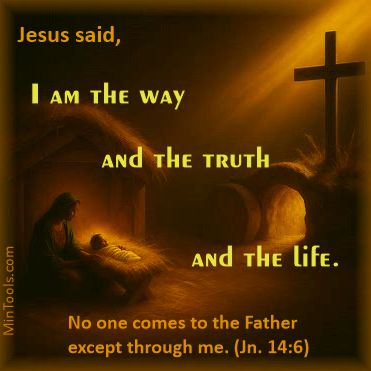
Bible teachers, help children understand not only what is most important but also what is real and truly makes a difference. Jesus isn’t mere holiday folklore. Use guided conversation to point to how Jesus is more than a fictional character, even more than children’s superheroes. He is the Way, the Truth, and the Life, something that cannot be said of any other.

Resources to Help Make the Holidays More Than Mere Tradition, Showing that Jesus is Not Make-Believe Holiday Folklore

Look for lessons and tools to help explain the holidays more clearly. Present Jesus accurately, authentically, and as absolute truth. Use activities, decor, and other resources that reinforce this emphasis and keep the focus where it belongs. Click on the links below for help doing that.

New Year:

Bible Lessons
Other Resources

Valentine’s Day

Bible Lessons
Other Resources

Easter

Bible Lessons
Other Resources

Mother’s Day

Bible Lessons
Other Resources

Father’s Day

Bible Lessons
Other Resources

Halloween:

Bible Lessons
Other Resources

Thanksgiving:

Bible Lessons
Other Resources

Christmas:

Bible Lessons
Other Resources

Share:

An Environment Conducive to Learning Over the Holidays

Share:

Holidays tend to disrupt the learning environment as students may come to class more distracted or more inattentive than normal. What’s a Bible teacher to do?

What Teachers Need to Provide Over the Holidays to Foster an Environment Conducive to Learning

Learning Opportunities Over the HolidaysGod tells us to “make the most of every opportunity” (Eph. 5:16). “Every” would include the holidays. Use the following acrostic as a reminder of what will help you foster a more conducive learning experience over holiday seasons.

H – Honor

Since students come already distracted by it, which especially happens with children, acknowledge the holiday rather than ignore it. Do it, however, in ways that not only honor the holiday but also the Lord.

O – Openness

Realize that people have different ways of celebrating as well as different views about the various holidays. Demonstrate respect.

L – Listening

Give students time to share rather than shut them down. Taking a short time to listen to their excitement or concerns could pay off in the long term to be able to then proceed with the lesson.

I – Insight

Come prepared with tidbits of information about the holiday (i.e., its origin, meaning of symbols, etc.).

D – Direction

Transition students from talk about the holiday to the lesson. Point them to relevant truths about God to get beyond the secularization of the holiday.

A – Adaptability

Be prepared to make adjustments due to fluctuation in attendance, inattentiveness of students, etc.

Y – Yardage

Make the most of the unique opportunity the holiday presents to point people to the Lord. That can be through guided conversation or designing a lesson around the holiday with relevant truths.

S – Sensitivity

Remember that certain holidays can be quite difficult for some people due to losses or other circumstances. Be considerate and compassionate.

For a Helpful Teacher Training Resource, Check Out: Intruders in the Classroom that Steal & Vandalize: Holidays & Other Special Events Download (Please note that the resource does not include the acrostic in this post.)

Share:

FAQ about the Holidays

Share:

FAQ about the Holidays

As the various holidays come near, whether it’s the upcoming Valentine’s Day, Easter, Halloween, Thanksgiving, or Christmas, Bible teachers might notice some effects in the classroom. That leads to this question.

FAQ: Aren’t teaching times around holidays basically throw-away sessions?

To look at teaching times as throw-away sessions suggests that it’s senseless to plan an actual lesson. We might be more prone to just fun and games during those sessions, or simply letting students converse about their holiday plans. While the holidays might lead to a more relaxed environment, perhaps with a special emphasis, it doesn’t mean teaching is a waste of time. Before dismissing that any kind of learning can happen, think through the issues at hand.

The Bible Teacher’s Handbook of Frequently Asked Questions includes this question and helps you further think through what to do with the potential for absences as well as what to do if students are more distracted. In addition, this handbook also responds to the question, “How might the holidays affect teaching?”. You’ll find help with teaching in this resource as well, with 153 total questions covering 48 other issues in teaching.

To make the most of a holiday, consider teaching on a relevant theme. Go to Holiday Teaching Opportunities Resources for Bible lesson ideas appropriate for different holidays.

Teacher Training Resource: Intruders in the Classroom that Steal & Vandalize: Holidays & Other Special Events

Share:

Beyond the Turkey

Share:

For many, Thanksgiving means sitting down with family for a turkey dinner. For Bible teachers, it only begins with the turkey. Whether your class time falls in anticipation of the holiday or after as a reflection, let students talk about the turkey but bring them back to the Thanksgiving part of it. Guide the conversation toward an acknowledgement of God’s provisions.

Get Beyond the Turkey to What They’re Thankful For

You could do this simply as a spontaneous sharing time. Or, you could use the circle response method where you go from person to person sitting in the circle to give one thing for which they’re thankful, followed by discussion. You can make it harder by not allowing repeats.

Another idea uses an acrostic of the word THANKSGIVING:

Beyond the Turkey on ThanksgivingFor older children or younger teens, you could start with a cut out of the body of a turkey posted on a bulletin board or wall. Make 12 feather cutouts, each with a letter of the word THANKSGIVING at the top of the feather, so when tacked on to the body, in order, it spells the word. Put the feather cutouts all in a bag. Have students reach their hand into the bag to pick a feather. They must write down something on the feather for which they’re thankful that begins with that letter. If you have less than 12 students, they pick more than one feather. If more than 12 students, you could make more than one turkey. Be sure to think through, ahead of time, how to handle this logistic.

For older teens or adults, you could give them a piece of paper with the word THANKSGIVING already printed on it vertically with space to write words that begin with each letter. You might even include a few Bible verses at the top or bottom of the page about being thankful like Ephesians 5:20, Colossians 3:17, or 1 Thessalonians 5:18. You could have them work on the acrostic individually and then come together to see how many unique words they came up with for the different letters.

Get Beyond What They’re Thankful For to the One Who Deserves Their Thanksgiving

We find commands in Scripture to be thankful but don’t stop there. Use it as a segue to remind students of some key truths:

1) All we have comes from God. (Ps. 24:1-2; 89:11; 1 Tim. 4:4; 6:6-8, 17)

2) Apart from God we can do nothing of eternal value. (Jn. 15:4-5; Phil. 4:13)

Consequently God ultimately deserves our expressions of thanksgiving for each and every person, thing, or ability we might list.

Bible Lessons: Use Thanksgiving to Cultivate Hearts of Gratitude All Year

Share: