To consider the importance of using audiovisuals and engaging teaching methods, reflect on this saying by the Chinese philosopher Confucius:
I hear and I forget.
I see and I remember.
I do and I understand.
That Might Be What Confucius Says, But What About God?
It all ties in to how we are “fearfully and wonderfully made” (Ps. 139:14). This ancient philosopher merely put into words the way the Lord designed the human body to function. God created people with five major sense organs through which we interact with the world around us. More nerve impulses go from the eye to the brain than from the ear to the brain. Thus, the more senses involved in the learning process, the greater the potential for learning as the number of messages going to the brain increases.
Also consider how God communicates. In the past He spoke through prophets and eventually had His words written down. In Scripture we find a God who didn’t merely use oral communication but often had the prophets demonstrate what He wanted people to know using objects, drama, and more. God Himself communicates audiovisually. Jesus, the Master Teacher, used a variety of methods and visuals in His teaching ministry.
What This Means for Bible Teachers Choosing and Using Audiovisuals and Teaching Methods
If God Himself communicated using audiovisuals and methods that engaged people, it should be important for us to do the same in teaching His Word. If we want our students to learn and grow, then we need to teach in accordance with the way God made people to learn. Perhaps we can reword the above saying to:
A lecture in itself could quickly be forgotten.
Adding some visual aids will increase retention.
Using interactive methodology will make an even greater impact.
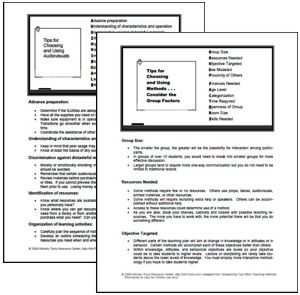
Resources to Help with Visualization and Methodology: