Guided Conversation Ideas for the Holidays

Share:

Excitement builds over the holidays. Personal struggles intensify. Distractions abound. All of that affects our Bible classes. We can choose to try to ignore it or seize these times as opportunities to purposefully interact with our students. God tells us to “make the most of every opportunity” (Eph. 5:16; Col. 4:5). We can do that through the use of Guided Conversation, a useful teaching method throughout the year but also over the holidays. We can use their excitement, struggles, and distractions as a jumping board into related spiritual truths about our Great God.

Ideas for Guided Conversation Over the Holidays That Point Students to God

Holiday Season Provides Guided Conversation OpportunitiesThe holiday window from the end of October through April is especially full of possibilities. We can turn conversation about upcoming holiday activities and stresses into teachable moments. Consider the following related truths about the holidays and what it teaches us about God. Look for opportunities to weave these truths into spontaneous, informal conversations about the holiday.

Halloween – God’s triumph in good versus evil — God is greater.

Thanksgiving – God’s blessings and gratitude to God — God is good.

Christmas – God’s plan of salvation — Jesus came to save us.

New Year’s Day – God’s hope for new beginnings — Jesus makes all things new.

Valentine’s Day – God’s love for all mankind — God cares for you.

Easter – God’s power to triumph over death and sin — Jesus is alive.

Clicking on the above links will take you to ideas for Bible lessons for those holidays. Even if you teach relevant lessons for the holidays, don’t forget to still use guided conversation as students work on activities. It’s a way to help students personalize the lesson.

(The suggestions listed above are included in the two-page Intruders in the Classroom that Steal & Vandalize: Holidays & Other Special Events Download.)

For More Help with Guided Conversation, check out these resources:

Share:

Sending Mixed Messages About Scripture Memory?

Share:

The psalmist hid God’s Word in his heart, knowing it could keep him from sinning (Ps. 119:105). He viewed the Word as “more precious than gold, than much pure gold” stating that it’s “sweeter than honey, than honey from the honeycomb” (Ps. 19:10). — Why might our students fail to have a similar view, particularly of Scripture memorization?

We may find adverse reactions to it due to boredom in the memorization process. The use of bribery fails to communicate intrinsic value and generally only has short-term results. A lack of perceived benefits lessens interest. Let’s also consider the possibility that we’re sending mixed messages about its value.

How Bible Teachers May Be Sending Mixed Messages about Scripture Memory

We may verbally communicate the benefits of memorizing Scripture, but our attitudes and actions may communicate otherwise. Ask yourself these questions:

  • Am I memorizing Scripture along with students?
  • Do I recall verses they’ve learned at appropriate and spontaneous times in conversations with students?
  • Have I shared illustrations from my personal life of how God used the Word hidden in my heart to help in times of need?
  • Do I display the same level of enthusiasm in this part of the lesson as in other parts?

If an honest assessment of our teaching causes us to respond with “no” to the above questions, students will be less likely to view Scripture memorization as beneficial and worth the effort no matter how much we try to convince them of its value.

Help with Scripture Memorization

Effective Scripture Memorization Worksheet

The six-page Effective Scripture Memorization Worksheet suggests 10 ways to get beyond a negative or neutral view of Scripture memory to a more positive attitude toward it. It begins with us as teachers.

Another helpful resource geared to anyone, not just teachers: Scripture Memorization Discipleship Guide

These articles may also be helpful:

Get even more help at: Scripture Memory Resources to Hide God’s Word in Our Hearts (The resources in that post aren’t all specifically geared to the classroom but you may find helpful ideas.)

Share:

Scripture Memorization That’s Age Appropriate

Share:

All Ages Can Hide the Word in Their Hearts if Scripture Memorization is Age Appropriate
Memorizing Scripture can lead to powerful benefits in our walk with God. Verses that allude to Scripture memorization, like Psalm 119:11, give no age for beginning, nor for ending. Whatever age you teach, from the youngest to the oldest, all can benefit from memorizing God’s Word.

Age-Appropriate Considerations in Scripture Memorization

We too can encourage people like Paul encouraged Timothy. — “But as for you, continue in what you have learned and have become convinced of … how from infancy you have known the Holy Scriptures, which are able to make you wise for salvation through faith in Christ Jesus.” (2 Tim. 3:14-15)

When using Scripture memory with your Bible class, consider these important elements to making it age appropriate:

1) length of the verse(s)

2) relevancy of the verse(s)

3)  content of the verse(s)

(You’ll find brief input on these elements in the Scripture Memorization Discipleship Guide. Along with age-appropriate considerations, this resource explores benefits and means of memorizing God’s Word, as well as some tips.)

Determine how these elements apply to the developmental needs and interests of these different age groups:

Preschoolers
Grade School Children
Teenagers
Young Adults
Middle Aged Adults
Senior Adults

More Resources:

Share:

Maximizing Time When Using Puzzles

Share:

We have minimal time in our Bible classes to make an impact on our students. To make every moment count (Eph. 5:16), puzzles can’t merely be used as time fillers. As with any activity, we must maximize time when using puzzles.

3 Tips for Maximizing Time When Using Puzzle

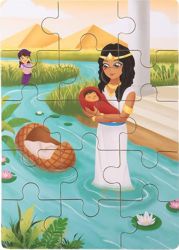
Bible Story Puzzles
Clicking on image goes to affiliate store.
  1. Choose puzzles that fit the theme of the lesson to reinforce learning.

If the lesson involves a Bible story, you might use puzzles related to that story. If you can’t find a puzzle on that story, perhaps you can make your own by cutting pictures into puzzle pieces. Another idea might be to use puzzles that portray the application of the lesson. For example, if teaching about sharing you might use a puzzle that reflects children sharing.

  1. Use guided conversation as children work on the puzzles to informally point them to God and bring the truths of the lesson into focus.

Don’t assume children will get the connection between the puzzle and the lesson. Talk with them about it as they work on the puzzle. Prepare some questions you might ask but also look for unscripted teachable moments.

  1. Color code the backs of the puzzles, using a different color for each puzzle, to cut time sorting through puzzle pieces for storage.

Seek to invest your time on students and their learning, not on clean-up of the activity. By color coding backs of puzzles, you’ll minimize time spent putting them away ready for future use.

Share: