How to Stay Out of Learning Center Ruts

Share:

Sometimes Bible teachers using learning centers get stuck in ruts. They use the same learning centers repeatedly, having students rotate through the centers the same way each time, rarely changing the set-up or the activities on the stations. When teachers get stuck in ruts, students’ learning sometimes gets stuck as well.

3 Tips for Staying Out of Learning Center Ruts

  1. Keep it fresh and interesting by using different types of stations throughout the year.

Familiarize yourself with different types of learning centers like the following: audiovisuals, arts/crafts, blocks, books, games, God’s Wonders, home living, music/worship, pictures, puzzles, research, stories — And, don’t limit yourself to using only centers you’re comfortable with.

  1. Keep it unpredictable by making changes occasionally, like not just different centers but also different kinds of activities or resources in the stations you do reuse.

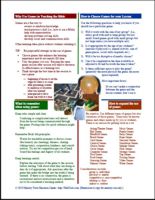
Bible Learning Activities Resource for Help Getting out of Learning Center RutsSometimes simply changing the activity within a center can reignite interest. Using the same activity with different resources can do the same. The Bible Learning Activities Resource covers activities for some of the above mentioned centers. In addition to providing tips for their use, it also gives suggestions of how to use them in varying ways.

  1. Keep it relevant by doing that which is appropriate to that day’s lesson theme and objectives.

If you can’t make a connection between the learning center and the lesson aim and content, don’t use it. We need to make each moment count with students. The more we use centers that reinforce the lesson, the greater the potential of learning.

Follow these three tips to make learning centers fresh, interesting, unpredictable, and relevant. When you do, you won’t find yourself getting into a rut. “Make the teaching about God our Savior attractive” (Titus 2:10) and students will benefit.

Share:

Guided Conversation as a Teaching Method

Share:

Not all learning in the classroom must be formal. In using Guided Conversation as a teaching method, the teacher speaks one-on-one with students as they engage in an activity. This kind of instruction promotes a more informal, relational type of learning.

Acrostic Showing How to Guide Conversation Purposefully

The following factors using the word GUIDED, make conversation purposeful and hence an effective means of promoting and reinforcing truth.

G God-centered

purposefully pointing students to God as you converse

But in your hearts revere Christ as Lord. Always be prepared to give an answer to everyone who asks you to give the reason for the hope that you have.(1 Pet. 3:15)

Let your conversation be always full of grace, seasoned with salt, so that you may know how to answer everyone. (Col. 4:6)

U Unscripted

spontaneously conversing with students about what’s relevant in the moment

… be ready in season and out of season … (2 Tim. 4:2)

I Insightful

taking learning to the next step by helping students grasp how what they’re doing relates to the truth learned

We continually ask God to fill you with the knowledge of his will through all the wisdom and understanding that the Spirit gives … (Col. 1:9)

D Deliberate

purposefully looking for opportunities to guide students toward the Lord

And let us consider how we may spur one another on … (Heb. 10:24)

… making the most of every opportunity … (Eph. 5:15-16)

E Engaging

not just dropping a truth on students but seeking two-way conversation

To answer before listening— that is folly and shame. (Prov. 18:13)

D Discerning

personalizing the conversation to the individual’s needs, abilities, and interests

I have become all things to all people so that by all possible means I might save some. (1 Cor. 9:22)

More Help Using Guided Conversation as a Teaching Method

Guided Conversation WorksheetThe Guided Conversation Worksheet also includes an acrostic with the word ‘Guided’ but it’s different from the one in this post. The worksheet can thus further add to your understanding of this method. This teacher training resource also asks some questions to help you think about your students and how you can use guided conversation with them.

Share:

Are Games a Good Bible Teaching Method?

Share:

Games are a good method because they’re an enjoyable way to learn, especially for children. Games can, however, lend themselves to situations that foster attitudes and actions contrary to God’s ways, like how He designed the Body of Christ to relate with one another. They’re no longer good as Bible learning activity when that happens as they become counterproductive.

3 Tips for Using Games in Good Ways

Do the following when considering a game as a Bible learning activity:

  1. Look at the big picture when choosing a game.

Make sure the game truly reinforces the lesson. Class time is short so we must purposefully choose whatever method we use. Our objective must always be to “make the teaching about God our Savior attractive” (Titus 2:10), not simply have a fun class.

  1. Modify the game to remove, or significantly minimize, elements that might foster ungodly attitudes or actions.

Even if the game seems to fit the lesson, we must also consider other effects in using it. Determine if  it will lead to unhealthy competition. Remember that God’s Word promotes honoring one another above ourselves (Rom. 12:10), kindness (Eph. 4:32), and fellowship with one another (1 Jn. 1:7).

  1. Find a different learning activity if the game can’t be modified to align with godly attitudes and actions or if it doesn’t enhance learning.

Don’t fall into the trap of using a game simply because students enjoy it. It’s important that any method we use underscores rather than contradicts truth.

More Help for Using Games as a Bible Teaching Method

Good Use of Games as a Bible Learning Method
You’ll find other tips for choosing and using games as a teaching method in the Games as a Bible Learning Activity Download. This teacher training resource is part of the Bible Learning Activities for Children Training Download that includes pages for seven other learning activities. The page on games can, however, be ordered separately.

Share:

Making Craft Activities More than Busywork

Share:

Class time is short so what teachers include in the lesson plan needs to count. When thinking about using craft activities, we must determine if they’re mere busywork or if they will actually help students learn. We should stop and consider their value in light of the short time we have.

3 Tips for Getting Craft Activities Beyond Busywork

1) Get students thinking as they work on the craft.

Mindless activity does little to increase learning. If students’ minds go elsewhere, so might their behavior as well. Whether through guided conversation as they work and/or crafts that are more engaging, make sure students aren’t lulled into passivity.

2) Give students freedom to express themselves.

Mechanical activity keeps students from learning as much as they could. A predetermined process and/or end result stifles initiative and creativity. When possible, allow students to make choices.

3) Take students to higher levels through purposeful planning of the craft.

Meaningless activity fails to enhance or reinforce learning. When the purpose for an activity isn’t clear, students’ learning tends to be hit or miss. We must make sure the craft fits the lesson but also determine the best timing for its use.

Craft Activities as a Bible Learning Activity DownloadIn the Crafts as a Bible Learning Activity Download, teachers will acquire tips on how to choose and use crafts for their lesson.

(You can order this individual training document or get it as part of the Bible Learning Activities For Children Training Download which contains a page for 8 different learning activities.)

Share: