
Games are a good method because they’re an enjoyable way to learn, especially for children. Games can, however, lend themselves to situations that foster attitudes and actions contrary to God’s ways, like how He designed the Body of Christ to relate with one another. They’re no longer good as Bible learning activity when that happens as they become counterproductive.
3 Tips for Using Games in Good Ways
Do the following when considering a game as a Bible learning activity:
- Look at the big picture when choosing a game.
Make sure the game truly reinforces the lesson. Class time is short so we must purposefully choose whatever method we use. Our objective must always be to “make the teaching about God our Savior attractive” (Titus 2:10), not simply have a fun class.
- Modify the game to remove, or significantly minimize, elements that might foster ungodly attitudes or actions.
Even if the game seems to fit the lesson, we must also consider other effects in using it. Determine if it will lead to unhealthy competition. Remember that God’s Word promotes honoring one another above ourselves (Rom. 12:10), kindness (Eph. 4:32), and fellowship with one another (1 Jn. 1:7).
- Find a different learning activity if the game can’t be modified to align with godly attitudes and actions or if it doesn’t enhance learning.
Don’t fall into the trap of using a game simply because students enjoy it. It’s important that any method we use underscores rather than contradicts truth.
More Help for Using Games as a Bible Teaching Method
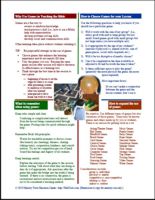
You’ll find other tips for choosing and using games as a teaching method in the Games as a Bible Learning Activity Download. This teacher training resource is part of the Bible Learning Activities for Children Training Download that includes pages for seven other learning activities. The page on games can, however, be ordered separately.