Appropriate Use of Games

Share:

Games can be an effective Bible learning activity but they need to be used appropriately.
Learn to Use Games Appropriately as a Bible Learning Activity
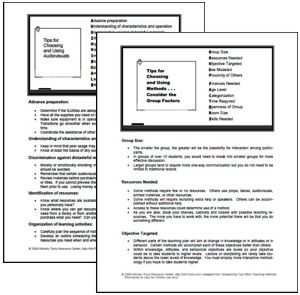
The one-page Games as a Bible Learning Activity Download is packed with tips for choosing and using games. It’s part of the Bible Learning Activities for Children Training bundle but can be ordered separately. (Please Note: The following acrostic is not included on this handout.)

Acrostic for an Appropriate Use of Games

Use this acrostic to help remember how to appropriately use games in Bible classes.

G – Godliness Fostered

… Be aware of attitudes competition might generate and encourage students that in whatever they do, to “do it all for the glory of God” (1 Cor. 10:31).

A – Age Appropriate

…  Make sure the skills needed in the game fit the abilities and interests of students’ age level.

M – Mentally Stimulating

… Help the class think through how the game ties into the lesson, making sure it has a purpose of enhancing learning.

E – Engaging

… Get everyone actively involved in some way as passivity can lead to boredom which can lead to trouble.

S – Safety Consciousness

… Be concerned not just with physical safety but also emotional (i.e., from embarrassment, ridicule, etc.).

The Bible Teacher’s Handbook of Frequently Asked Questions Resource answers these questions about using games:

  • Isn’t the use of games in Bible classes just a time filler?
  • Does competition really have a place in Bible classes?
  • How can I keep the game from flopping?
Share:

Teaching the Bible in a Media-Saturated World

Share:

We live in a media-saturated world. What is a Bible teacher to do, especially if teaching children and youth who have grown up with everyday media usage? How can a teacher keep up?

3 Tips for Teaching God’s Word in a Media-Saturated World

When using media to teach the Bible, we need to use it well but not get consumed with it. These tips remind us that we must never lose sight of the real purpose in teaching.

  1. Don’t try to compete with the world. We have something far more impacting than the world can off. We have Jesus who transforms lives in ways our words alone can’t, whether spoken, read, sung, or projected.

He is the image of the invisible God, the firstborn over all creation. For by him all things were created: things in heaven and on earth, visible and invisible, whether thrones or powers or rulers or authorities; all things were created by him and for him. He is before all things, and in him all things hold together. And he is the head of the body, the church; he is the beginning and the firstborn from among the dead, so that in everything he might have the supremacy. (Col. 1:15-18)

My message and my preaching were not with wise and persuasive words, but with a demonstration of the Spirit’s power, so that your faith might not rest on men’s wisdom, but on God’s power. (1 Cor. 2:4-5)

  1. Use media in ways that help to get and maintain students’ attention and connect with them where they are, but, use it merely as a tool to a greater end.

… in every way they will make the teaching about God our Savior attractive. (Titus 2:10)

I have become all things to all men so that by all possible means I might save some. (1 Cor. 9:22)

  1. Keep motivation in check for using media, making sure goals align with God’s desire for people to know Him better and have their lives transformed, not merely to entertain.

We proclaim him, admonishing and teaching everyone with all wisdom, so that we may present everyone perfect in Christ. (Col. 1:28)

Using Media as a Bible Learning Activity in a Media-Saturated World
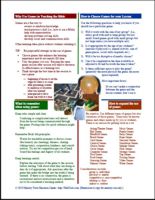
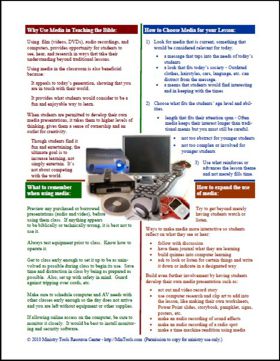
Check out the one page training document, Media as a Bible Learning Activity Download.

This training resource briefly considers the benefits of using media in teaching the Bible, how to choose media for your lesson, what to remember when using it, and how to expand the use
of media.

For More Teacher Training Resources, Go To: Media / Technology in the Classroom

Share:

Importance of Audiovisuals and Engaging Teaching Methods

Share:

To consider the importance of using audiovisuals and engaging teaching methods, reflect on this saying by the Chinese philosopher Confucius:

I hear and I forget.
I see and I remember.
I do and I understand.

That Might Be What Confucius Says, But What About God?

It all ties in to how we are “fearfully and wonderfully made” (Ps. 139:14). This ancient philosopher merely put into words the way the Lord designed the human body to function. God created people with five major sense organs through which we interact with the world around us. More nerve impulses go from the eye to the brain than from the ear to the brain. Thus, the more senses involved in the learning process, the greater the potential for learning as the number of messages going to the brain increases.

Also consider how God communicates. In the past He spoke through prophets and eventually had His words written down. In Scripture we find a God who didn’t merely use oral communication but often had the prophets demonstrate what He wanted people to know using objects, drama, and more. God Himself communicates audiovisually. Jesus, the Master Teacher, used a variety of methods and visuals in His teaching ministry.

What This Means for Bible Teachers Choosing and Using Audiovisuals and Teaching Methods

If God Himself communicated using audiovisuals and methods that engaged people, it should be important for us to do the same in teaching His Word. If we want our students to learn and grow, then we need to teach in accordance with the way God made people to learn. Perhaps we can reword the above saying to:

A lecture in itself could quickly be forgotten.

Adding some visual aids will increase retention.

Using interactive methodology will make an even greater impact.

Resources to Help with Visualization and Methodology:

Share:

Using Drama Effectively

Share:

Even Using Drama Need to be Done to the Glory of God
Bible teachers have many methods from which to choose, with drama being one of them. If we choose to use drama, we can take steps to use it effectively, so we heed 1 Corinthians 10:31. — “whatever you do, do it all for the glory of God.”

An Acrostic of Ways to Effectively Use Drama as a Bible Teaching Method

When choosing and using drama as a Bible teaching method, implement the following factors to increase the potential of students learning from its use.

D – Diversity

Don’t get locked into one set way of using this method. Use variations of drama. Any method overused tends to lessen its effectiveness.

R – Relevance

Make sure to choose a drama activity that fits the content and purpose of the lesson but also connects with the lives of students.

A – Age Appropriateness

Choose that which has content students can grasp and that accommodates their acting abilities and vocabulary.

M – Minimization of Chaos, Maximization of Learning

Adequately prepare. Think through the logistics.

A – Assessment

Ask if the drama accomplished its goal. Learn from the use of this method by determining ways to do better next time.

Share: