
There are a lot of people in this world with hurting hearts, many of whom will attend our Bible classes. If we don’t identify that they’re hurting, we might misinterpret their attitudes or behavior and hence apply solutions that either don’t work or complicate matters. We may miss out a prime ministry opportunity. God wants us to be careful and wise, “making the most of every opportunity” (Eph. 5:15-16).
Ways People Might Express Their Hurting Hearts
Hurting people respond differently and so the way they react in the classroom could vary. Some may put on a front while others may show their feelings in ways you can’t miss. Some students may not quite seem like themselves yet appear to be pushing through whatever is going on inside of them.
- They could be distracted, finding it hard to pay attention.
- They could build walls around themselves, finding it hard to open up.
- They could withdraw or become lethargic, finding it hard to participate.
- They could be depressive, finding it hard to enjoy learning activities and fellow class members.
- They could clown around in class, finding it hard to be real about their insecurities.
- They could be more talkative, finding it hard to keep from pulling others into their woes every opportunity they can.
How Bible Teachers Respond to Students Who Hurt
Regardless of the way it’s expressed, hurting hearts can hinder the individual’s ability to learn as well as affect the overall learning environment. Bible teachers who want to minister to students with hurting hearts must respond with the love of God by addressing the real need. It’s about determining what you, and possibly others in the class, can do to “carry each other’s burdens, and in this way you will fulfill the law of Christ” (Gal. 6:2).
Here are two teacher training resources to help:
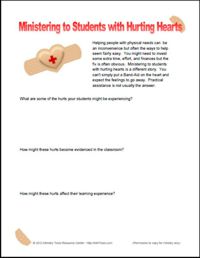
The 6-page Ministering to Students with Hurting Hearts Worksheet looks at five things these students may need. It gives Scripture related to each need and asks some questions about how you might meet those needs.

The 31-page Bible Teachers’ Many Roles in Times of Trouble resource shows you can meet these needs by being a comforter, listener, counselor, encourager, or intervener. If we truly want to minister to students with hurting hearts, we will undoubtedly need to go beyond merely being a communicator.